This page lists a sample of current work and older favorites.
 HIGHLIGHT:
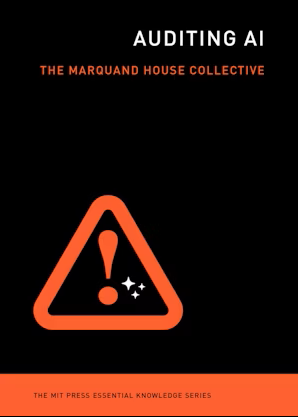
Our work on “algorithm auditing” (a phrase coined by our lab) was recommended by the Obama White House as one of five research strategies essential to the future of tech in the United States. Our research was later cited in Sandvig v. Barr, a case called “a huge win” for the freedom of information and a “major victory for civil liberties and civil rights enforcement.” In 2022, our position on the right of researchers and journalists to audit AI was affirmed by the U.S. Supreme Court, where our work was again cited. This means we changed the definition of hacking in the United States. We discuss this further in our 2026 book, Auditing AI.
CURRENT PROJECTS
Auditing AI (book page at MIT Press, older very short overview [PDF], older white paper [PDF]) — Investigating illegal discrimination in digital media curation and ranking from the outside.
Race, Policing, and Detroit’s Project Green Light (web site) — Meet one of the most controversial surveillance systems in the US, offering automated face recognition in private places with real-time monitoring by police.
Sensing Algorithms (podcast episode: algorithmic imaginaries // podcast episode: social media) — A collaboratory between art, music, architecture, cultural studies, and computer science to make hidden algorithms tangible or visible.
The Feed — A forthcoming book project — more soon!
PAST FAVORITES
Awakenings of the Filtered (demo [PDF], study #1 [PDF], study #2 [PDF]) — To help users audit their own Facebook curation algorithm we developed a system that lets them explore the posts that Facebook filters out.
The RED Project (journal article [PDF], screenshots [PDF]) — Rendering Electromagnetic Distributions (RED) was an interactive system that used a visual metaphor of redlining to illustrate inequality in access to technology.
Digital Studies Meet Platform Studies (research article [PDF]) — Two theoretical worldviews characterize objects of study in the digital media landscape like Google and Facebook: infrastructure studies and platform studies. Can we cross-articulate them? Is one theory really a subset of the other?
Digital Research Confidential (book page at MIT Press, first chapter [PDF]) — What if we asked social and computational researchers to describe their research methods by describing what really happened? A book about advancing research methods for studying online behavior.
For more, try: Christian Sandvig’s publications page.